
INTRODUCTION
Makar Sankranti is one of the most ancient and auspicious festivals of India. Unlike many Hindu festivals that depend on the lunar calendar, Makar Sankranti is based on the solar calendar and is celebrated every year on 14th or 15th January. This sacred day marks the transition of the Sun (Surya Dev) from the zodiac sign Dhanu (Sagittarius) to Makar (Capricorn).
The word “Makar” means Capricorn, and “Sankranti” means transition. Hence, Makar Sankranti signifies the auspicious movement of the Sun into Capricorn, beginning the northward journey of the Sun known as Uttarayan.
🌄 MYTHOLOGICAL AND SPIRITUAL STORY
THE STORY OF LORD SURYA AND HIS SON SHANI
According to Hindu mythology, Lord Surya (the Sun God) and his son Lord Shani (Saturn) had a strained relationship. Shani ruled the zodiac sign Makar. On the day of Makar Sankranti, Lord Surya visits the house of his son Shani, symbolizing forgiveness, reunion, and harmony.
This divine visit teaches humanity that even strained relationships should be healed with love, humility, and understanding. Therefore, Makar Sankranti is also considered a festival of ending bitterness and beginning unity.
THE STORY OF MAHARAJA SAGAR AND THE DESCENT OF GANGA
Another significant legend is connected to King Sagar and his 60,000 sons. They were reduced to ashes due to a curse by Sage Kapila. To liberate their souls, King Bhagiratha performed intense penance to bring River Ganga from heaven to Earth.
It is believed that on Makar Sankranti, the sacred waters of the Ganga descended on Earth. Bathing in holy rivers on this day is believed to wash away sins and grant moksha (liberation).
BHISHMA PITAMAHA AND THE GIFT OF UTTARAYAN
One of the most powerful stories comes from the Mahabharata. Bhishma Pitamaha, who had the boon of choosing the time of his death, lay on a bed of arrows after the Kurukshetra war. He chose to leave his mortal body during Uttarayan, beginning on Makar Sankranti, as it is believed that souls departing during this period attain higher spiritual realms.
This story highlights the spiritual importance of Makar Sankranti as a time of divine ascension and liberation.
🌾 AGRICULTURAL AND SEASONAL SIGNIFICANCE
India being an agrarian society, Makar Sankranti marks the end of the winter solstice and the beginning of longer days. It is a harvest festival, expressing gratitude to nature, the Sun, and the Earth for abundance and prosperity.
Farmers celebrate this day as a reward for their hard work and pray for future prosperity.
🍬 TRADITIONS AND SYMBOLISM
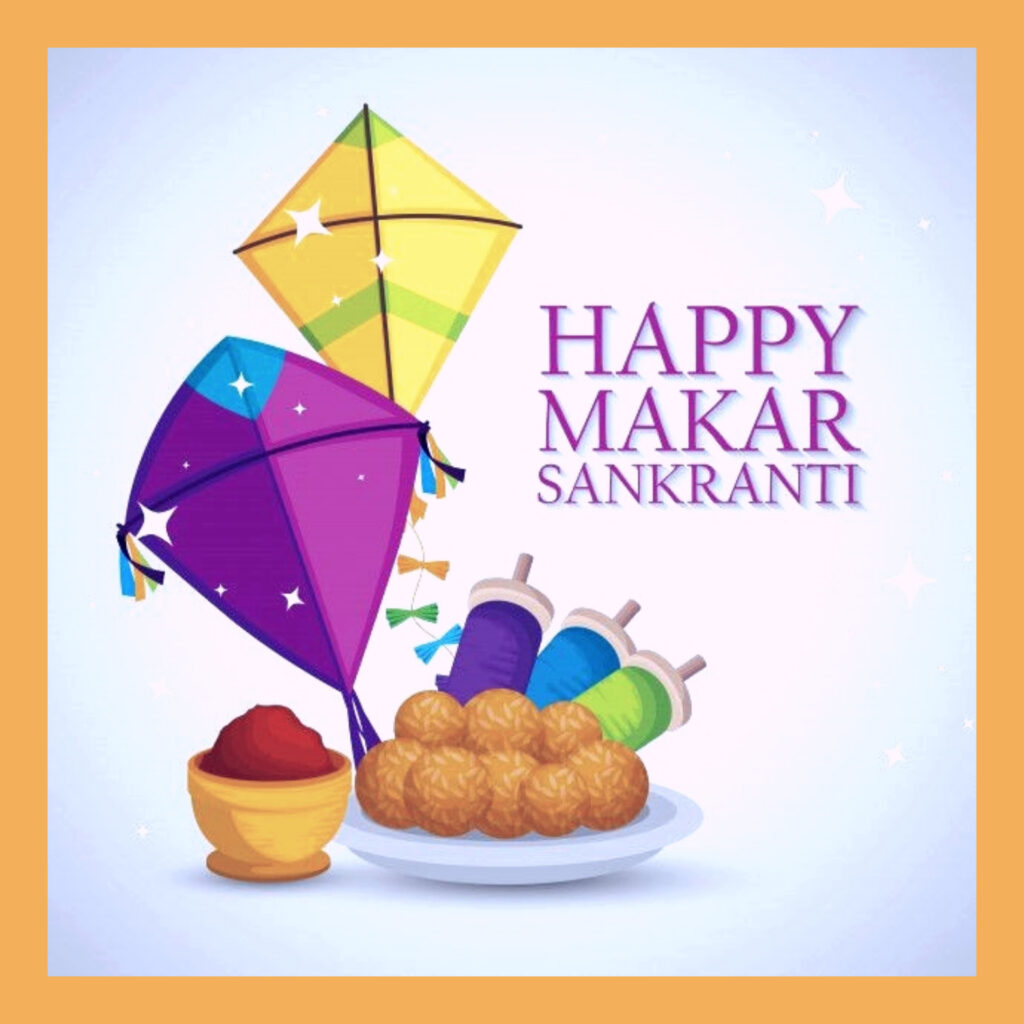
Til-Gud (Sesame and Jaggery)
People exchange sweets made of sesame seeds (til) and jaggery (gud), saying:
“Til-gud ghya, god god bola”
(“Accept these sweets and speak sweetly.”)
Sesame represents warmth and energy, while jaggery symbolizes sweetness in relationships. Together, they convey the message of harmony, kindness, and compassion.
KITE FLYING
Kite flying symbolizes freedom, joy, and elevation of the soul. As the Sun grows stronger during Uttarayan, people gather under the open sky to celebrate life and togetherness.
🕉️ IMPORTANCE OF MAKAR SANKRANTI
-
Spiritual Importance – A highly auspicious day for charity, meditation, holy baths, and worship.
-
Social Importance – Encourages forgiveness, unity, and sweet speech.
-
Scientific Importance – Marks the Sun’s northward movement, bringing warmth and health.
-
Cultural Importance – Celebrated across India in different forms:
-
Pongal (Tamil Nadu)
-
Uttarayan (Gujarat)
-
Lohri (Punjab)
-
Magh Bihu (Assam)
-
🌺 WHY MAKAR SANKRANTI IS CELEBRATED
Makar Sankranti is celebrated to:
-
Honor the Sun God as the source of life
-
Mark the beginning of Uttarayan, a positive and auspicious phase
-
Celebrate harvest and abundance
-
Promote peace, harmony, and sweetness in human relations
-
Encourage spiritual growth and charity
🌞 CONCLUSION
Makar Sankranti is not just a festival—it is a celebration of light over darkness, knowledge over ignorance, warmth over cold, and unity over division. It teaches us to move forward with positivity, gratitude, and compassion, just as the Sun begins its auspicious journey northward.